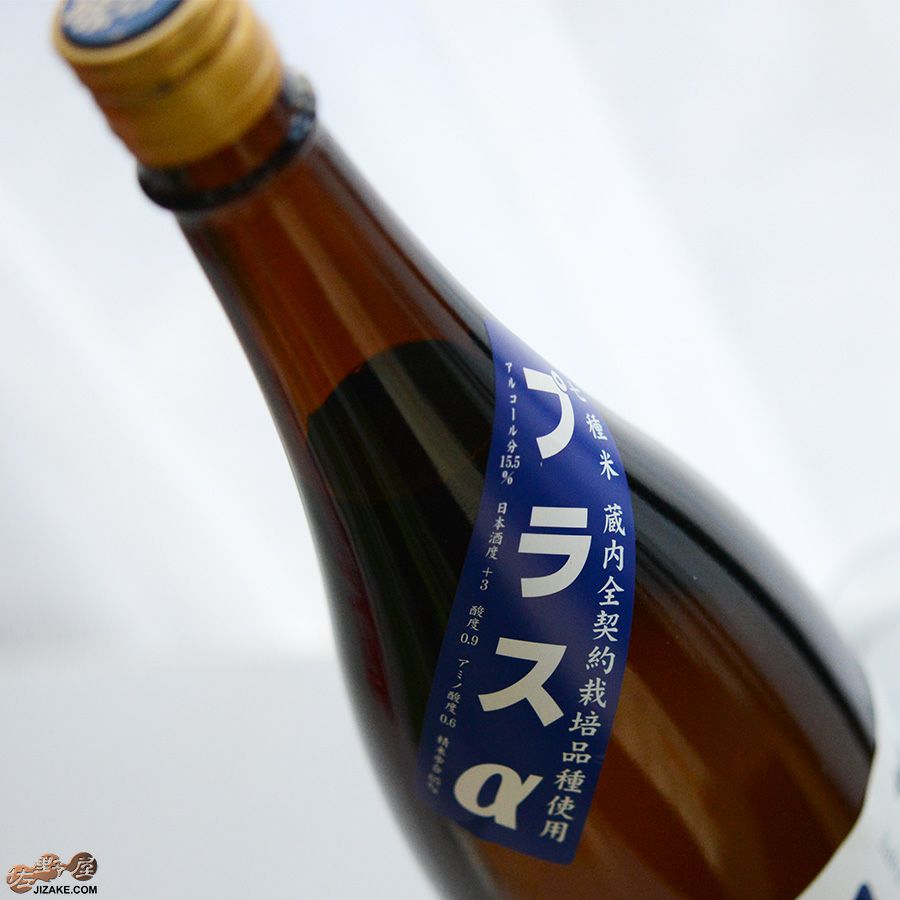
Hakuro Taruzu Plus Alpha Unfiltered Sake.

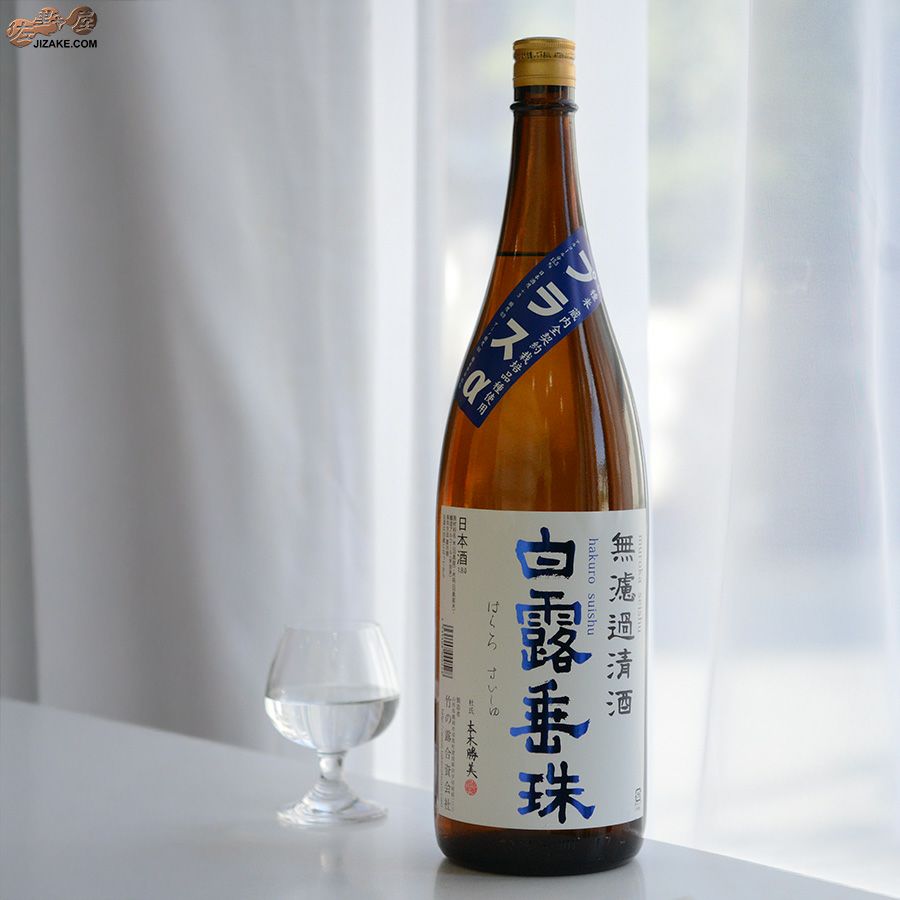
This is Shiroro-Taruzu, the most popular Sake at Sanya on the Internet. It is a sake made by Take-no-Roh Limited Partnership located in Haguro-machi, Yamagata Prefecture. Now, what does this "plus alpha" mean? Parker would be surprised if you could guess the rice used to make this sake at a sake tasting. The following is a quote from the store's description: "At 2,090 yen for 1 shou, this is a very inexpensive sake. It is also cheap, at 2,090 yen for 1 shou (1 bottle), and is for advanced drinkers.
Haguro's rice paddies become a bottle of sake, an all-star "Plus Alpha" made from seven varieties of rice.
Sake rice grown in the rice paddies of Haguro, Shonai,
Not a single drop was wasted, and it was all put together in one bottle,
It is "Shiroro Taruzumu Plus α Unfiltered Sake".
Kame-no-o, Miyamanishiki, and Dewa Sanzan.
This rice is normally used for Junmai Ginjo and Junmai Daiginjo class brewing.
It is a super ordinary sake of the tokutei meishu class, brewed by gathering “7 kinds” of sake.
What does it really taste like?
To know the answer,
Gently place a bottle of this on your table tonight,
Try adding just one cup “extra” to your usual side dishes.
The aroma quietly melts away in the glass,
The delicious flavor of the rice nestles in easily.
Seven varieties of rice grown in the rice fields of Haguro,
From that first bite, it gently teaches your tongue the answer.
A luxurious but not overbearing evening sake made with Junmai Daiginjo-class rice.
All of the rice used in Shiroro Tarusyu is contract grown in Haguro.
Because the rice is grown while monitoring the condition of the rice paddies, the yield is not exactly the same every year.
We have 750 kilograms in stock, but 800 kilograms have arrived," he said.
Such “little extra rice” is inevitably produced.
We don't want to waste the rice we put our heart and soul into growing," he said.
So the brewery came up with the idea of making the last brew of the year,
To make a bottle of sake by "plus-adding" seven varieties of contract-grown rice that are left over.
The result is Hakuro Taruzu Plus α, an unfiltered sake.
The name was given, of course, by proprietress Kozue Aizawa.
Miracle," "Little Devil," and "Jellyfish."
He is the naming director of the brewery, having created a series of impressive brand names.
We do not want to end up with sake that is merely a compilation of surplus rice.
The landlady's major role is to give it a story and a sense of fun.
The design of the inside is no less than the name.
It is originally used for Junmai Daiginjo and Junmai Ginjo class brewing,
Contract rice grown in Haguro.
The rice is polished to a 65% milling ratio,
A small amount of rice-derived brewing alcohol is added to the sake to improve its quality.
Furthermore, it is finished without carbon filtration.
The flavor of the rice is preserved in the bottle.
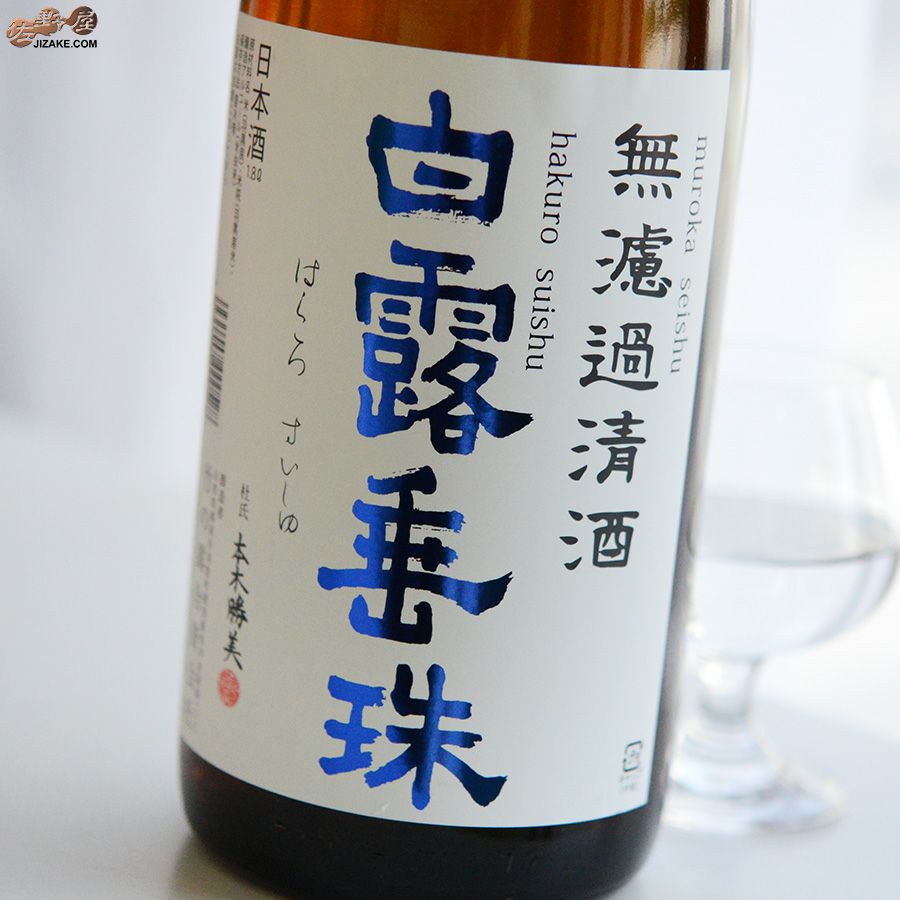
It is labeled as "Normal Sake" on the label,
The contents of this bottle can almost be described as a design for a specific name sake class.
A bottle that makes you smile and say, "I can't believe they went this far with a regular sake.
Shiroro Tarusyu's Super Normal Sake, brewed with a collection of seven varieties of contract-cultivated rice.
Just having a bottle of this in the fridge changes the evening drinking scene a bit.
What shall we match it with today?
Conversations such as these are born, and the entire dining table is loosely connected, from grilled fish and hot pots to a bowl of soba noodles.
Another reason why it is so easy to pair with daily meals is that it has the nostalgia of being able to be served at any temperature, from cold sake to heated sake.
The upper class of Hakuro Tarazhu is known as a brand that has won gold medals at national and international competitions.
The brewery brews this everyday sake with the idea of "bringing it to the dinner table every day.
In fact, it has quietly gained a following among sake fans as a staple for evening drinks that is repeated by the square.
And here is a bit of disappointing news.
This "Hakuro Taruzu Plus α Unfiltered Sake" will be sold at the end of this season's brewing.
Only a few cases remain in the warehouse.
The items we are able to deliver this time are really the “last plus-alpha”.
Without thinking too hard, we first have a drink with our usual supper.
Seven kinds of blessings from the rice fields of Haguro gently raise the level of today's meal.
Next time I'll try it heated.
When you feel that way, this one will already be a regular member of your household.
We hope you will enjoy it once, and hopefully again, while it is still in stock.
| List of Labels | |||
| raw rice | Malted rice used | ||
| ratio indicating the quantity of polished rice gained from a given quantity of brown rice (nowadays usually expressed as a percent) | sake brewing name | ||
| Yeast used | Manufacturing Prefectures | ||
| sake (implied to be low-grade) | Production period | ||
| acidity | Date of purchase | ||
| amino acid degree | Tasting Day | ||
| alcohol content (usu. expressed per cent) | Where to Buy | ||
| specific name | optional entry | ||
| Other Special Notes | |||
| wine tasting | |||
| Information on vision | |||
| cage | even | ||
| sunshine | colorant | ||
| Information on sense of smell | |||
| (incense) pastille | incense | ||
| tobacco smoke | incense for the aged | ||
| type of incense brewed by low temperature fermentation from white rice milled to 60% | |||
| Information on Taste | |||
| sweetness | elegant | ||
| depressing the string of a zither with one's left hand | light (flavor, flavour) | ||
| heavy | sliding | ||
| light (i.e. not heavy) | bitterness | ||
| grudges and hard feelings | bustling | ||
| peppiness (of a ball) | rich | ||
| clean | 幅 | ||
| off-flavor | old age | ||
| acidity | swelling | ||
| astringency | dimwit | ||
| round | young | ||